
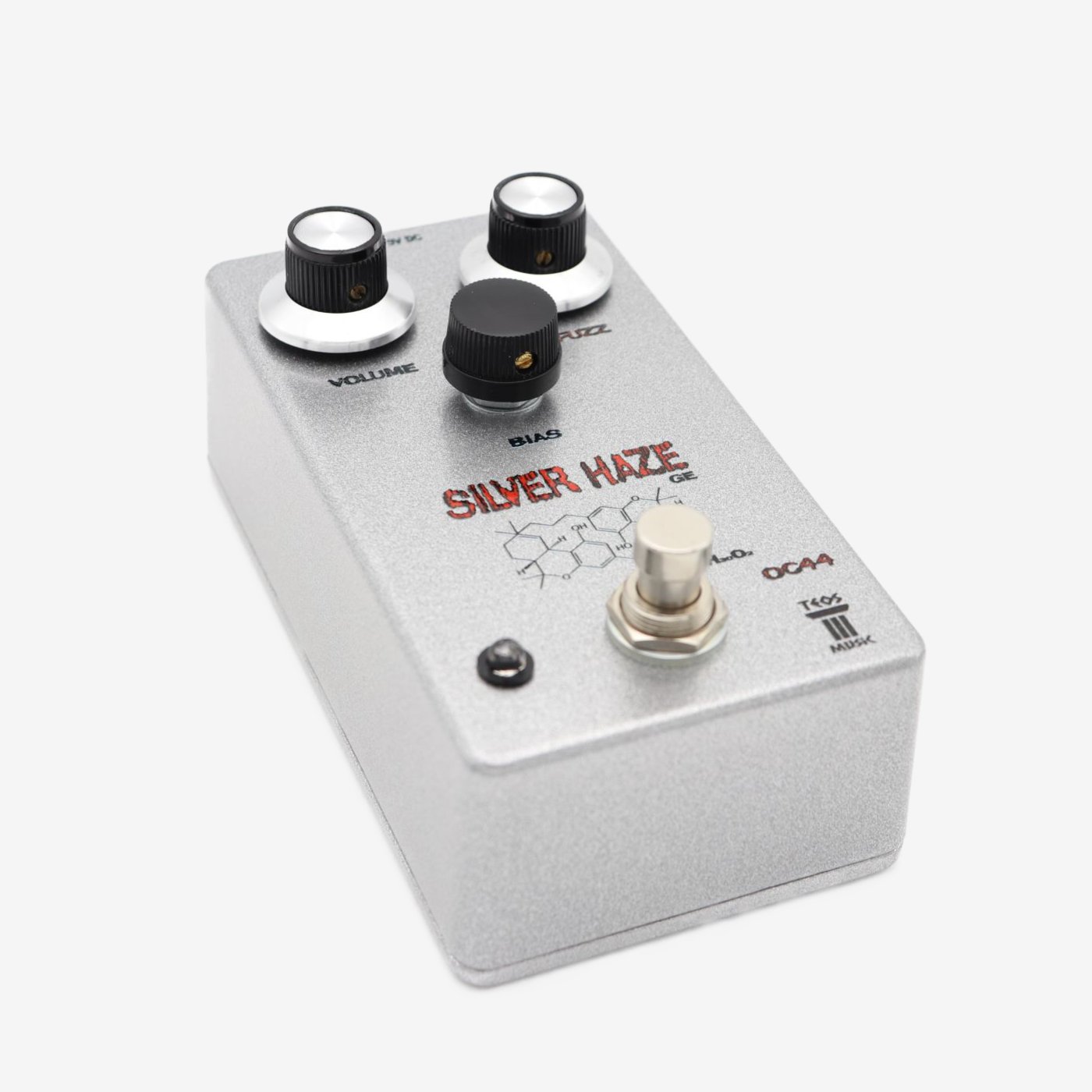
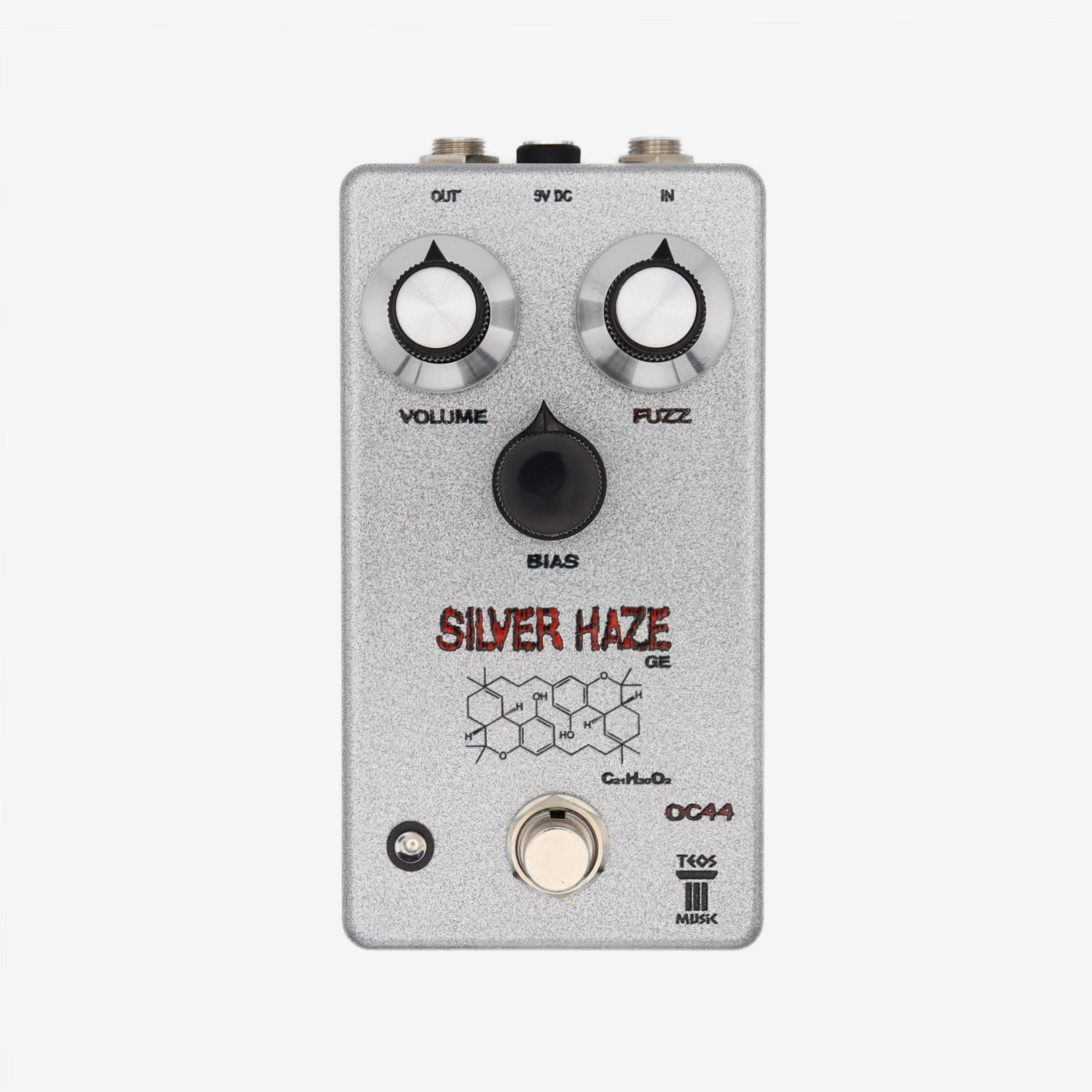
Key design points
- Analog germanium fuzz built around carefully selected NOS OC44 transistors
- Circuit inspired by early 1960s fuzz designs, with strong touch sensitivity and dynamic response
- Use of Philips Mullard OC44 transistors, chosen for their smooth grain, harmonic richness, and musical behavior
- Limited production linked to the actual availability of NOS OC44 transistors
Fuzz behavior and controls
- Fuzz control to adjust saturation intensity, from softer fuzz tones to denser, more saturated textures
- Volume control to set the output level and match the rest of the signal chain
- Bias control to adjust the transistor operating point, ranging from round and stable tones to rougher, more unstable textures
Internal adjustment and signal interaction
- Internal CLEAN trim acting as a preset cleanup control, comparable to rolling back the guitar’s volume
- Allows the fuzz response to be softened, improves signal stability, and helps with compatibility when placing effects before the fuzz
- Internal adjustment to tailor the fuzz response to different pickup types (single coils or humbuckers)
Power and modern compatibility
- Designed to operate with a standard 9V DC center-negative power supply, unlike many traditional germanium fuzz pedals
- Enables direct integration on modern pedalboards without center-positive power supplies or batteries
- Reduced noise, grounding issues, and interference compared to classic germanium fuzz designs
- No battery operation
Overall design
- 100% analog circuit, hand-built with through-hole components
- Designed for strong interaction with guitar volume and playing dynamics
- True bypass
- UV-printed 125B enclosure



 English
  French